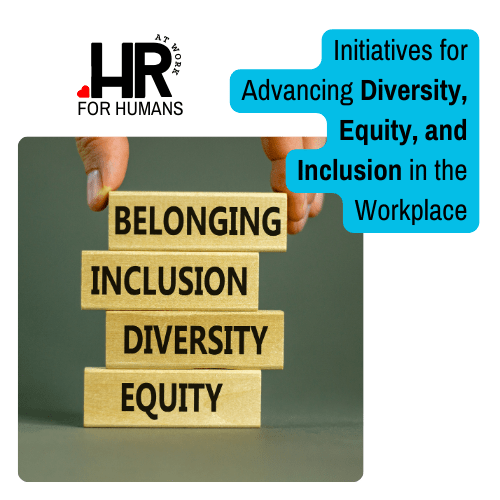
According to research, diverse teams are more creative and effective, which can spur corporate expansion. But tackling diversity and inclusion calls for more than simply policies; it calls for a dedication to equality, guaranteeing that all workers, regardless of background, have equal chances for professional growth and success. The fact that inclusive projects are currently ranked among the top HR compliance challenges, along with wage and hour laws, workplace safety, and data privacy (CPAPA), emphasizes their significance. In the last 20 years, the number of employment litigation has surged by 400%; failure to fulfill these criteria can result in heavy fines (UpCounsel).
Companies are starting a variety of programs to promote diversity, including inclusive leadership training, mentorship programs for underrepresented groups, and targeted recruitment tactics. In addition to addressing compliance, these actions contribute to the development of a more encouraging and fair work environment. Organizations may reduce the risks of non-compliance and cultivate a culture that values varied viewpoints by embracing diversity. This will strengthen collaboration and increase employee engagement. Promoting diversity is both a moral duty and a competitive benefit in a time when corporate and social responsibility are tightly linked.
Here’s what thought leaders say.
Innovative Unconscious Inclusion Program
At Rework Work, we offer a DEI program called Unconscious Inclusion that addresses the complaint that unconscious bias training “doesn’t work” and the perceived lack of time to attend a workshop. With bite-sized chunks continually dripped to learners, our learning program provides more content in less time with sustained focus—learners only need to spend about 15 minutes per week for behaviors to begin to change, putting words into practice and demonstrating knowledge through action. Using neuroscience and emotional intelligence, this program results in behavior change.
In the work I do with thousands of professionals, one of the questions that consistently comes up is, “Who am I to say something?” or “Should I speak up?” The answer is yes, and this program provides the confidence for individuals to do that.
Second, it gives them the language they need in order to speak up. If you’ve never done it, how would you know what to say?
Third, it is effective because it uses sustained learning combined with the way our brain forms habits, to shift mindsets.

Stacey Gordon, Chief Diversity Strategist, Rework Work
Courageous Conversations Foster DEI Learning
At our organization, we’ve started holding “Courageous Conversation” sessions on various DEI topics led by SMEs (Subject Matter Experts), comprised of internal employees and/or external individuals. These Courageous Conversations are facilitated learning sessions with a specific DEI topic that employees are interested in learning more about.
We compile the topics from survey results, feedback from meetings/open forums, and input from our DEI Committee. After each Courageous Conversation session, we conduct an anonymous survey to get feedback on the impact of the session, how much was learned, the facilitators, what could have been done better, and employee representation (by department, tenure, etc.).
Thus far, we’ve seen tremendously positive results from the post-session surveys we’ve conducted. In addition, while these Courageous Conversation sessions have been voluntary, a majority of our employees have chosen to attend these sessions. This has shown us that employees have an intrinsic desire to continue to learn and grow in the realm of DEI.

Mayank Singh, Director of Human Resources, Coordinated Family Care
Assessment Leads to Inclusive Practices
One recent DEI initiative I led involved assessing the inclusivity of our organization through a framework that focused on three key dimensions: co-creating success as a team, fostering communities with purpose, and evaluating the effectiveness of feedback mechanisms. This assessment helped us identify how well we were integrating the diverse perspectives of employees and their role in decision-making processes.
By acting on these findings, we implemented more inclusive practices, such as redefining feedback channels to ensure psychological safety for all employees, especially those from marginalized backgrounds. As a result, we saw a 15% increase in employee engagement and a noticeable improvement in the retention of employees.
In today’s climate of anti-DEI backlash, it’s even more critical to focus on measurable outputs like this, as they demonstrate the tangible impact of inclusive policies amidst external challenges.

Bhavik R. Shah, Founder & Culture Change Strategist, Bhavik R. Shah LLC
Mentorship Boosts Underrepresented Employee Advancement
We recently launched a mentorship program specifically aimed at advancing diversity, equity, and inclusion by connecting underrepresented employees with senior leaders. The goal was to create career development opportunities and foster a more inclusive culture.
Within six months, we saw a 25% increase in promotions among participants and a noticeable improvement in employee engagement scores, particularly around feelings of inclusion. Feedback from both mentors and mentees highlighted stronger cross-departmental relationships and growth opportunities. This measurable success showed that intentional support can lead to real, positive outcomes in DEI.

Tanya Lamont, CEO, Conversational
Equity Advisors Program Increases Faculty Diversity
One of the most impactful initiatives at the University of the South (Sewanee) that has been implemented to advance DEI is the Equity Advisors (EA) Program for Faculty Searches. This initiative supports the institution’s commitment to creating an equitable and inclusive community and prioritizes diversity across units.
Once trained, the EAs offer evidence-based strategies to assist search committee chairs and members in increasing their awareness and understanding of implicit bias and to provide strategies for mitigation. Based on program evaluations, department chairs agree that a benefit of the initiative is that faculty are having more “explicit conversations about bias which fosters a more equitable and inclusive search and decision-making process.” Similarly, department chairs appreciate that, as a result of this program, they now have “knowledgeable peers within departments who can continue to educate, challenge, and effect structural change.”
Most notable outcomes since the program’s launch in Fall 2022: Diversity within faculty candidate pools has increased by 20%. Successful diverse faculty hires have increased underrepresented racial/ethnic faculty numbers by more than 30%, including a recent diversity cohort hire.

Sibby Anderson-Thompkins, VP Diversity, Equity, and Inclusion, Sewanee: The University of the South
Prioritizing Discomfort Enhances DEI Training
Diversity and inclusion often get a bad rap from the “facts over feelings” crowd, who think it’s all about making people comfortable. But here’s the kicker: DEI is actually about centering discomfort, and that’s where real transformation happens. Prioritizing discomfort is a much more meritocratic approach than the “colorblind” method of building successful organizations.
At Morgan Oliver School, we’ve adopted this philosophy, creating spaces for challenging conversations that happen openly and productively. Research indicates that excessive comfort leads to resistance to learning. Discomfort acts as a catalyst for growth, prompting individuals to confront biases and engage in meaningful self-reflection.
We host regular workshops on tough topics like race, identity, and privilege, encouraging honest discussions where participants can express their feelings and confront biases. Then, skilled facilitators help navigate sensitive issues, ensuring discussions are constructive and making discomfort a valuable part of the learning process. We also gather feedback after each session to refine our approach, adapting our exploration of challenging topics based on real experiences.
Embracing discomfort has led to significant outcomes. Our staff reported a 35% increase in their understanding of DEI concepts, demonstrating that addressing difficult issues fosters meaningful learning. We’ve seen improved employee retention and increased collaboration and creativity, as team members feel empowered to share diverse perspectives.
By flipping the script on traditional inclusivity training, we’ve created an environment where discomfort drives growth. This approach promotes a more diverse workplace and enhances our educational experience, leading to a more inclusive and equitable environment for our students and families.
The bottom line? Prioritizing discomfort is not just an effective strategy for DEI—it’s a powerful tool for transforming your organization into a solid, healthy, productive place to work.

Jared Humphries, Director of Marketing and Communications, The Morgan Oliver School
Implement a “Stronger Allies” Training Program
We’ve created a 4-session Stronger Allies training program as a learning foundation for employees. The program covers privilege, allyship roles, psychological safety, microaggressions, and more over four weeks. We’ve found that most people genuinely want to be better allies at work but might not have the tools or know-how to do so. This training aims to provide individuals with the awareness, insights, and action steps needed to act daily in ways that bring and sustain allyship within an organization.
As well, by offering our Stronger Allies program twice a year, we keep a focus on the importance of DEI without it seeming like a one-and-done training initiative. One hundred percent of our most recently surveyed cohort reported, “Participating in this course made me feel more confident to show up as an ally,” which is our ultimate goal.

Cecilia Gorman, Management Training Consultant, Manager Boot Camp
Cultivate Belonging Through Team Conversations
When it comes to DEI initiatives, it’s important for teams to discuss their preferences as they relate to various dimensions such as communication styles, conflict-management strategies, what motivates them, how they like to receive feedback, their strengths, and more. Discussing and appreciating these differences contribute to creating an environment where everyone feels heard and seen.
These types of conversations should start with the senior leadership team so that they can model how to strengthen team dynamics and cultivate a sense of belonging. The way we approach this work is by addressing one topic at a time and allowing the space for conversation, sharing differing perspectives, and then aligning on how to proceed as a team by committing to rules of engagement. This has been powerful in taking the steps necessary to be intentional about culture.

Carolina Caro, CEO, Conscious Leadership Partners
Engage Community for Diverse Opportunities
Diversity, Equity, and Inclusion in the workplace are about inviting many different kinds of people to share their expertise within a meaningful purpose. We do this at eMed by being heavily involved in our local community, including local colleges, universities, and nonprofits dedicated to increasing opportunities for minorities to join the technology field.
We participate in mentorship programs, serve on panels to share our expertise, invite local organizations on-site to see our office and a day in the life of a “techie,” and advocate for these programs with other HR professionals.

Nurdes Gomez, Director of People Operations, eMed
Design Sensory Zones for Neurodivergent Inclusion
Noise is one of the most common and persistent barriers for neurodivergent people in the workplace. We use a process called “soundscaping” to design a variety of sensory zones throughout the workplace to give people clear options and choose a space that best suits their sensory needs.
For neurodivergent people, workplace barriers may not be visible. For neurodivergent children, noise frequently stops them from being able to take part in a range of activities. These issues persist into adulthood and the workplace.
When you think about sound and neurodiversity, the image that comes to mind might be a child covering their ears when they hear a loud noise like a vacuum cleaner. This is one type of response, but it’s not the only scenario. Atypical responses to sound are most commonly associated with autism, but even within autism, responses vary hugely. And people with other diagnoses, like ADHD, Tourette’s syndrome, and dyslexia, can also process and respond to sound differently too.
Some neurodivergent people are hyper-sensitive to sound. This encompasses a variety of responses, like a phobia of loud noises, discomfort caused by specific characteristics like high-pitched sounds, or emotional responses to specific trigger sounds (like people chewing or breathing). Others are hypo-sensitive, where complex, stimulating environments are enjoyable and beneficial for work.
Using a process called “soundscaping,” we introduce a variety of ambient background sounds across the workplace. These are sounds from the natural world because they have measurable benefits for neurodivergent and neurotypical populations for stress and productivity. In some spaces, the soundscaping is designed for hyper-sensitive employees: It masks distractions and creates a soothing, predictable environment. In other areas, we introduce stimulation for hypo-sensitive people.
We communicate these options to employees. Importantly, these sounds are generated using AI so that they never loop. In some areas, like wellness rooms, employees even have direct control of the soundscaping so that they can choose a sonic “theme” that’s right for them.
The approach has been beneficial to neurodivergent and neurotypical employees: Measurable reductions in stress (-47%), cognitive improvements (+31%), improved ease of collaboration (+19%), and much more. While neurodivergent people may have the most to gain, sensory design solutions can create healthier workspaces for everyone.

Fran Board, Marketing and Research Director, Moodsonic
Join the Conversation
Which insight resonated most with you? What measures worked for your organization? What advice will you give? Share your thoughts in the comments below!
About Humane HR Perspectives
Our round-up series “Humane HR Perspectives” examines the fundamentals of humanising human resources (HR) from the perspectives of top authorities within and relevant to the industry. Q&A sessions with founders, CEOs, HR professionals, business leaders, and other significant players who are influencing the direction of HR are included in every edition.
Throughout the employee life cycle, we address a wide range of subjects in this series, including recruitment and selection, onboarding, training and development, performance management, employee engagement, pay and benefits, and more. We also go over important topics like compliance, change management in the workplace, morale and welfare, workplace communications, and diversity and inclusion.
The “Humane HR Perspectives” series offers insightful advice and practical examples to help develop a more encouraging, productive, and successful workplace—whether you’re an HR professional, a business leader, or just someone who is enthusiastic about creating a great work environment. Join us as we explore the approaches, difficulties, and triumphs that characterise HR humanisation and acquire unique access to the knowledge and experiences of individuals spearheading the movement.
Let Us Know What You Think
We’d love to read your thoughts! Join the conversation and share your insights with us.
- What key takeaways resonated with you the most?
- How do you see this topic impacting your business or organisation?
- What additional insights or experiences would you like to share?
Disclaimer and Other Relevant Information
The insights and any linked resources in our content are for informational purposes only and do not constitute professional advice. The opinions expressed in our articles reflect the contributors’ perspectives and do not necessarily represent the views of our entire platform. Please consult our policies for more information.
Here are the shortcuts to our policies that must be read along with each other:
- Terms of Service
- Disclaimer and Disclosure
- Privacy Policy
- Voluntary Contribution Policy
- Editorial Guidelines
- Content Submissions
For more details about us and what we do, here are some of the links:
- About Us
- Blog
- Book Review Request Step 3
- Book Reviews and Requests
- Contact
- Content Submissions
- Disclaimer
- Editorial Guidelines
- Humane HR Awards
- Humane HR Awards Winners
- Humane HR Book Reviews
- Humane HR Perspectives
- Magazine
- News
- Our Supporters
- Privacy Policy
- Subscribe
- Support Us
- Terms of Service
- Voluntary Contribution Policy
Here are shortcuts to our content:
- All About Humanising HR
- Book Reviews
- Compensation and Benefits
- Compliance
- Diversity and Inclusion
- Employee Engagement
- Employee Relations
- Humane HR Awards
- Humane HR Perspectives
- Humane HR Talk
- Morale and Welfare
- News and Announcements
- Performance Management
- Recruitment and Selection
- Talent Management
- Training and Development
- Workplace Change Management
- Workplace Communications
- Workplace Health and Safety
Nominate for the Humane HR Awards
Let’s recognise, celebrate, and encourage what’s making the world of work better. It’s free to nominate. Submissions are open all year-round, but why wait? Nominate today!


 HR for Humans at Work
Leave a comment