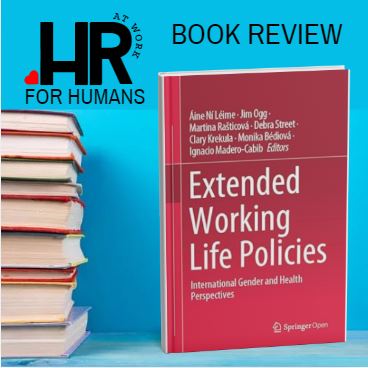
This comprehensive book investigates the interplay of gender and health within extended working life policies, providing critical insights that can inform humanising HR practices for older workers.
Challenging Workplace Norms
The necessity for deliberate policy for longer working life has never been greater in a time when the workforce is changing and populations are aging. The authors highlight that nearly 40% of older workers express concerns about their ability to work beyond retirement age, revealing the significant gaps in understanding the lived experiences of this demographic. Extended Working Life Policies presents an invaluable analysis that bridges research and policy, offering essential perspectives on how gender and health influence older workers’ experiences. The contributors bring together an international team of scholars, addressing the urgent issues that affect workers, employers, and policymakers alike.
The book provides a rich overview of the empirical and policy literature surrounding extended working life, exploring theoretical perspectives and the available data that inform effective policy-making. Each of the concise country reports delivers unique insights into the extended working life research findings across different national contexts. By illuminating the challenges and opportunities faced by older workers, the authors present a compelling case for humanising HR practices to foster inclusive workplaces that recognise the value and potential of an ageing workforce. This focus on the intersection of gender, health, and work not only broadens the conversation but also paves the way for innovative policies that promote equity and well-being.
I attempted to find weaknesses in the text but discovered none; the authors provide a well-structured and informative exploration of a critical area often overlooked in discussions of workforce management. Those who resist acknowledging the importance of addressing age-related issues in the workplace may not appreciate this book, while HR professionals and policymakers will find it an essential resource for developing inclusive strategies. The themes resonate with the works of Richard Scase, particularly his exploration of the changing nature of work in modern society. Reading Extended Working Life Policies is akin to peeling back the layers of a complex onion, revealing the intricate and often unseen dynamics that shape the future of work.
About the Editors
Áine Ní Léime is Deputy Director of the Irish Centre for Social Gerontology at the National University of Ireland, Galway. She was Chair of COST Action IS1409, an international research network on Gender, Health and Extended Working Life from 2015 to 2019. Her current research focuses on older workers, gender, and extended working life. She is the Principal Investigator for Ireland on a NORFACE-funded project comparing experiences of older workers in multiple countries.
Jim Ogg is Head of the Ageing Research Unit at the National Pension Fund in France and an Honorary Research Fellow at Swansea University. His research encompasses the sociology of family in the context of ageing populations and the transition to retirement.
Debra Street is a Professor of Sociology at the State University of New York at Buffalo, focusing on the challenges of ageing societies.
Clary Krekula is a Professor of Sociology at Karlstad University, specialising in critical age studies.
Martina Rašticová leads the Department of Law and Social Sciences at Mendel University in the Czech Republic, with recent research in age management.
Monika Bédiová conducts research on diversity management and active aging.
Ignacio Madero-Cabib is an Assistant Professor of Sociology and Public Health in Chile, focusing on social advantages among older populations.
Engage with Us
- What insights from the book resonate with your experience?
- How can organisations better support older workers?
- What policies do you believe are necessary for promoting extended working life?
Disclaimer and Other Relevant Information
The insights and any linked resources in our content are for informational purposes only and do not constitute professional advice. The opinions expressed in our articles reflect the contributors’ perspectives and do not necessarily represent the views of our entire platform. Please consult our policies for more information.
Here are the shortcuts to our policies that must be read along with each other:
- Terms of Service
- Disclaimer and Disclosure
- Privacy Policy
- Voluntary Contribution Policy
- Editorial Guidelines
- Content Submissions
For more details about us and what we do, here are some of the links:
- About Us
- Blog
- Book Review Request Step 3
- Book Reviews and Requests
- Contact
- Content Submissions
- Disclaimer
- Editorial Guidelines
- Humane HR Awards
- Humane HR Awards Winners
- Humane HR Book Reviews
- Humane HR Perspectives
- Magazine
- News
- Our Supporters
- Privacy Policy
- Subscribe
- Support Us
- Terms of Service
- Voluntary Contribution Policy
Here are shortcuts to our content:
- All About Humanising HR
- Book Reviews
- Compensation and Benefits
- Compliance
- Diversity and Inclusion
- Employee Engagement
- Employee Relations
- Humane HR Awards
- Humane HR Perspectives
- Humane HR Talk
- Morale and Welfare
- News and Announcements
- Performance Management
- Recruitment and Selection
- Talent Management
- Training and Development
- Workplace Change Management
- Workplace Communications
- Workplace Health and Safety
Nominate for the Humane HR Awards
Let’s recognise, celebrate, and encourage what’s making the world of work better. It’s free to nominate. Submissions are open all year-round, but why wait? Nominate today!


 HR for Humans at Work
Leave a comment