
Erica Anderson Rooney, executive coach, author, and founder of HER Collective, challenges traditional leadership models that equate success with sacrifice. She focuses on creating spaces where ambition aligns with well-being. In this interview, Rooney explores the barriers women face and the internal work needed to advance in today’s workplaces.
Erica, thank you for joining us. To begin, could you introduce yourself in your own words—your professional journey, what HER Collective stands for, and what led you to champion this particular intersection of HR, leadership, and personal growth?
I’m a wife, mom to two incredible kiddos, executive coach, keynote speaker, and author of the bestselling book Glass Ceilings and Sticky Floors. I’m also the founder of HER Collective, a powerhouse digital community designed for ambitious women who are ready to grow their careers, build powerful networks, and rise through the corporate ranks without losing themselves in the process.
My professional journey has been anything but linear. I actually started out in fitness and wellness, deeply rooted in helping people become the strongest version of themselves. That passion eventually brought me into the world of Human Resources, where I dedicated myself to climbing the corporate ladder, ultimately landing in the C-suite as a Chief People Officer.
From the outside, it looked like I had made it. I had the title, the compensation, the cush remote job—but inside, I knew something was off. I had to fight for my voice in boardrooms filled with microaggressions, bias, and the kind of subtle power plays that so many women are all too familiar with. I realized: I wasn’t alone. And I wasn’t okay with that.
That’s when I knew I had to do something more.
I created HER Collective because I believe women shouldn’t have to choose between success and sanity. We shouldn’t have to burn out to break through. My mission is to help women break free from the “sticky floors”—the limiting beliefs, imposter syndrome, perfectionism, and people-pleasing that hold us back—and shatter the glass ceilings that were never designed with us in mind.
HER Collective is where ambition meets opportunity. It’s a space where real ambition is celebrated, hard questions are asked, and women are empowered to go after what they want—and actually get it.
Because here’s the truth: You can have the title. You can have the paycheck. But if you don’t have peace, purpose, or people who get you—what’s it all for?
That’s the intersection where I do my work: HR, leadership, and personal growth. And it’s where I believe the real magic happens.
Your signature framework focuses on “glass ceilings and sticky floors.” How do you define those concepts, and what inspired you to turn them into the foundation of your book, podcast, and platform?
Glass Ceilings and Sticky Floors actually started as a podcast. I launched it because I wanted to have real conversations with real women about what it actually takes to succeed in today’s workplace. Not the polished soundbites but the real stuff. And as I interviewed women from all walks of life—executives, entrepreneurs, leaders—I started noticing some undeniable patterns.
Yes, the glass ceilings were there: the external barriers that hold women back. The lack of representation, the gender pay gap, the microaggressions, the broken rung on the corporate ladder. But what really stood out to me were the sticky floors—what I call the internal struggles that were keeping so many brilliant, ambitious women stuck.
I’m talking about imposter syndrome, perfectionism, fear of failure, burnout. And not just the big ones—we’re also talking about the quiet little habits that chip away at us: doom scrolling on TikTok instead of working on that big idea, numbing out with wine on a Wednesday night, staying busy instead of staying intentional.
And I saw it in myself, too.
I realized: while we’re busy trying to smash ceilings, we’re often stuck on sticky floors of our own making. And until we deal with those? We’re not going anywhere.
That insight became the foundation of my book, my coaching, my keynotes—essentially everything. Because breaking barriers isn’t just about leaning in—it’s about looking within. It’s about realizing, “If I want more, I have to become more.” And that doesn’t mean doing more. It means becoming more of who you already are, underneath all the layers of expectation and exhaustion.
So now, Glass Ceilings and Sticky Floors isn’t just a podcast. It’s a movement. It’s a wake-up call. And it’s a guide for any woman who’s ready to break free.
In your experience, what are the most common sticky floors—the internal beliefs or habits—that prevent even high-performing individuals from stepping into leadership roles?

In my experience, the sticky floors that trip up even the most high-performing, capable women tend to come down to three big ones: imposter syndrome, perfectionism, and the fear of failure.
Let’s break that down.
Imposter syndrome is everywhere. I’ve coached C-suite executives who still feel like someone’s going to “find them out.” It shows up as over-preparing, downplaying wins, or constantly questioning whether we’re really qualified—even when we’re more than capable. It keeps women from raising their hands for big opportunities because they think they need one more certification, one more degree, or to be 110% ready before they’re even allowed to try.
Perfectionism is another major one. It masquerades as ambition, but it’s really fear in disguise. It tells us we can’t mess up. That everything has to be flawless before we show up. And that mindset paralyzes progress. It keeps women stuck in endless loops of overthinking and tweaking instead of executing.
And then there’s the fear of failure, which often sounds like, “What if I try and it doesn’t work?” But just as often, it’s “What if it does work and I can’t keep up?” That fear drives women to play it safe, to stay in roles where they’re overqualified but under-fulfilled, because the risk of rising feels heavier than staying stuck.
How can organizations become more aware of the invisible glass ceilings that still persist, especially for women and other underrepresented groups? What role does HR need to play here?
Invisible glass ceilings persist because they’ve been normalized. They show up in who gets promoted, who gets sponsored, and who gets overlooked—especially for women and underrepresented groups. Organizations need to look beyond surface-level DEI metrics and dig into the data: promotion rates, exit interviews, and who’s in the leadership pipeline.
HR plays a critical role—not just in policy, but in accountability. It’s HR’s job to call out the gaps, build equitable systems, and ensure leadership development isn’t reserved for the “usual suspects.” That means removing bias from hiring and promotion processes, training managers to recognize their blind spots, and creating clear pathways to advancement.
Can you share an example of a moment—personal or professional—when you had to shatter your own ceiling or unstick yourself from a limiting belief? What helped you move forward?
When I stepped into my first C-level role in tech, I didn’t have a tech background and had never held a C-title before. I kept thinking, “When are they going to find me out?”—which is a classic symptom of imposter syndrome. But instead of spiraling, I used my own SNAP method. This is my four-step, science-backed framework to pivot those limiting beliefs. I acknowledged the fear, reframed the narrative, and chose to move forward anyway. That moment taught me that fear doesn’t mean you’re not ready. It means you’re growing.
You’ve built a community through HER Collective. What does this space offer that traditional leadership development programs often miss? What’s the “human” at the heart of it?
HER Collective offers what traditional leadership programs often miss: real-life support for real-life women. It’s not just about climbing the ladder. It’s about doing it without losing yourself in the process. We focus on the human behind the high-achiever—the mom juggling meetings and daycare, the woman navigating burnout, the leader battling imposter syndrome. It’s a space rooted in community, not competition. We grow together, ask the hard questions, and make room for both ambition and authenticity. At the heart of it? Belonging. Because leadership isn’t just about skill. It is about community. It is about support.
You hold several credentials—HR executive, SHRM-CP, PMP, and executive coach. How do you integrate those disciplines into one unified approach to leadership transformation?
For me, knowledge is power, and when you combine it with action, that’s where transformation happens.
My background in HR gives me deep insight into how organizations function and where systems break down. The SHRM-CP keeps me grounded in compliance and people strategy, while the PMP brings structure, accountability, and execution to the table. And my executive coaching certification ties it all together. It’s the human lens, the mindset work, the personal breakthroughs.
I use all of it to help leaders not just perform, but transform—with clarity, confidence, and a plan rooted in both science and soul.
Have you received any recognitions or milestones—either through your book, your speaking work, or HER Collective—that affirmed the impact of your approach? What have those meant to you?
My book Glass Ceilings and Sticky Floors became a bestseller, was endorsed by Mel Robbins, and featured in SUCCESS magazine. I’ve had the honor of speaking on national stages like SHRM, SXSW, and CHIEF, and being recognized as a top voice in leadership and women’s empowerment. I was also nominated to the University of Florida’s prestigious Alumni Hall of Fame—something that truly felt full-circle.
But the real impact is in the messages from women who say, “Because of you, I asked for the promotion,” or “I finally feel seen.” That’s what drives me. The awards are incredible, but the real milestone is knowing this work is changing lives.
For companies looking to build stronger leadership pipelines, especially for those facing “sticky floor” challenges, what are a few culture shifts or initiatives they should start with today?
For companies serious about strengthening their leadership pipelines—especially for women and underrepresented talent stuck on those “sticky floors”—it starts with shifting from a butts-in-seats mindset to an outcomes-based culture. Stop measuring time at the desk and start measuring impact. That shift alone unlocks flexibility, trust, and performance.
Second, make parental leave equitable for everyone. When only women take leave, it reinforces outdated gender roles and deepens the leadership gap. Normalize caregiving across the board.
Finally, invest in mentorship and sponsorship, and make leadership development accessible earlier in the pipeline—not just once someone’s already “on the radar.” Growth doesn’t start at the top. It starts with opportunity.
What’s your message to the ambitious professional who feels stuck—who’s capable but hesitant, ready but unsure? What’s the first step they can take to lead themselves forward?
You are never stuck. That’s the biggest lie we tell ourselves.
On my podcast, I always ask guests, “What’s the one piece of advice you’d give your younger self?” And mine is simple: You’re not dreaming big enough.
So if you’re feeling hesitant or unsure, start there. Challenge yourself to dream bigger. Bigger than your fear, your doubt, or your current circumstances. Because the first step forward isn’t perfect clarity—it’s the courage to believe there’s more waiting for you.
If you were to write your bio in your own words, what would you say?
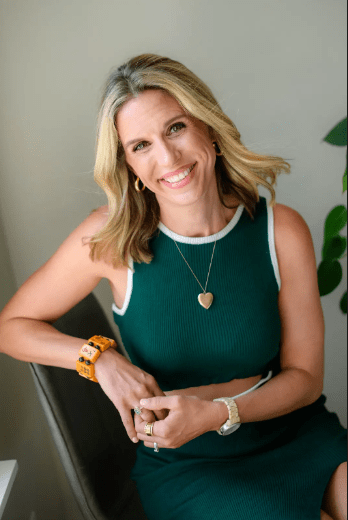
I’m a powerhouse in leadership, gender equality, and workplace culture, with over 15 years of experience in HR—including my time as a Chief People Officer in the tech industry. I’m the bestselling author of Glass Ceilings and Sticky Floors and the host of the Glass Ceilings and Sticky Floors podcast, where I inspire thousands to break free from limiting beliefs and step into infinite possibilities.
I’m also the founder of HER Collective, a digital community and movement created to help ambitious women grow their careers, amplify their voices, and unlock their full potential—without sacrificing authenticity or well-being.
I’ve had the honor of speaking on iconic stages like SXSW and CHIEF, and my work has been featured in Forbes, SUCCESS Magazine, and CBS News. Whether I’m coaching executives, speaking to corporate teams, or challenging outdated norms, my mission is simple: to help people and companies shatter barriers, unleash potential, and create success without limits.
Link
Connect with Erica via LinkedIn
About Humane HR Talk
Welcome to Humane HR Talk, where we present insightful interviews with HR industry experts and thought leaders in related fields sharing their strategies, perspectives, and visions for creating more human-centric workplaces. Through these discussions, you’ll gain practical tips and fresh inspiration to transform your HR practices, to foster inclusive, thriving cultures, and to help in your own journey in the evolving world of work.
Share Your Insights
We’d love to hear your thoughts! Share your insights in the comments below.
- What stood out to you about humane HR from what you’ve read?
- What has worked well in your organisation or business?
- What would you recommend?
Disclaimer and Other Relevant Information
The insights and any linked resources in our content are for informational purposes only and do not constitute professional advice. The opinions expressed in our articles reflect the contributors’ perspectives and do not necessarily represent the views of our entire platform. Please consult our policies for more information.
Here are the shortcuts to our policies that must be read along with each other:
- Terms of Service
- Disclaimer and Disclosure
- Privacy Policy
- Voluntary Contribution Policy
- Editorial Guidelines
- Content Submissions
For more details about us and what we do, here are some of the links:
- About Us
- Blog
- Book Review Request Step 3
- Book Reviews and Requests
- Contact
- Content Submissions
- Disclaimer
- Editorial Guidelines
- Humane HR Awards
- Humane HR Awards Winners
- Humane HR Book Reviews
- Humane HR Perspectives
- Magazine
- News
- Our Supporters
- Privacy Policy
- Subscribe
- Support Us
- Terms of Service
- Voluntary Contribution Policy
Here are shortcuts to our content:
- All About Humanising HR
- Book Reviews
- Compensation and Benefits
- Compliance
- Diversity and Inclusion
- Employee Engagement
- Employee Relations
- Humane HR Awards
- Humane HR Perspectives
- Humane HR Talk
- Morale and Welfare
- News and Announcements
- Performance Management
- Recruitment and Selection
- Talent Management
- Training and Development
- Workplace Change Management
- Workplace Communications
- Workplace Health and Safety
Nominate for the Humane HR Awards
Let’s recognise, celebrate, and encourage what’s making the world of work better. It’s free to nominate. Submissions are open all year-round, but why wait? Nominate today!


 HR for Humans at Work
Leave a comment