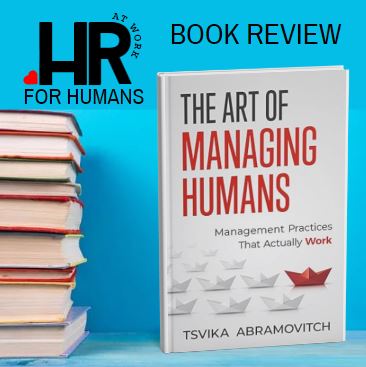
You don’t normally associate playground equipment with the boardroom, but that’s exactly what Tsvika Abramovitch does—and convincingly so. His “Seesaw Model” isn’t child’s play; it’s an actionable philosophy grounded in decades of lived experience, offering an insightful and refreshingly non-academic roadmap to managing working relationships.
Imagine watching someone rebuild a bridge while walking across it—and succeeding. That’s this book. Abramovitch invites readers not into theory, but into the dusty, high-pressure, chaotic trenches of human resource management where people, not policies, make or break companies.
A Management Book That Actually Admits You’re Human
Most corporate books tend to either idolize managers or blame employees. This one treats everyone like they’re trying—and sometimes failing—at being people. It reads more like a field diary of someone who stumbled into a job, stayed for decades, and decided to write a letter to his former self so others wouldn’t have to learn everything the hard way.
There’s no generic “rah-rah leadership” talk here. Instead, you’ll find practical episodes: how roundtable discussions can implode if not prepared properly, why flattening hierarchy isn’t about ego but visibility, and how transparency in the face of layoffs can earn gratitude, not resentment. If these sound like contradictions, that’s precisely the point: human relationships are paradoxes that need tending.
No Spoilers, But Prepare for a Few Gut Checks
In his dissection of workplace evolution—from mechanical “manpower” to emotional “human capital”—Abramovitch holds up a mirror to the reader. Ever silently rooted for the office underdog? Ever winced at top-down decisions gone wrong? You’ll find yourself nodding in recognition.
But this isn’t a nostalgia trip or a management rant. The author’s seesaw metaphor (which could’ve easily felt gimmicky) is so deeply embedded into the book’s structure that it works almost like a mental calibration tool. If you’ve ever wondered why one side of the workplace always seems heavier, this book shows you where the counterweights are hiding.
Scientific Backbone: Balance Beats Control
Cognitive science supports what Abramovitch emphasizes throughout: humans aren’t rational decision-makers, they’re relational ones. Social psychology has repeatedly shown that organizational loyalty and productivity hinge less on incentives and more on perceived fairness, visibility, and emotional connection. The book’s case studies align with this—demonstrating that emotional intelligence is not a “soft skill” but the spinal cord of leadership.
Even the neuroscience of workplace stress validates the book’s approach: managers who invest in dialogue and attentiveness lower cortisol levels in teams, increasing both morale and performance.
Who Should Read This?
Ideal For:
- Team leaders burned out on management theory and craving something real.
- HR professionals rethinking the role of their department.
- Young managers in tech or global companies navigating hybrid workforces.
Less Ideal For:
- Those looking for a bullet-pointed productivity formula.
- Readers uncomfortable with introspection or ambiguity.
- Organizations allergic to transparency or change.
This isn’t a listicle. It’s a conversation you might’ve had at 2AM after a long strategy session with someone who finally got it right on attempt number six.
Final Word: No Pedestals, Just Perspective
The Art of Managing Humans doesn’t promise miracles, and that’s its charm. It acknowledges that managing people isn’t about finding the perfect formula—it’s about tuning a constantly shifting balance. The book doesn’t pretend to fix your company overnight, but it will make you ask better questions, host more honest meetings, and perhaps even sleep better—whether you’re the CEO or the intern.
Should you read this book? Yes—but not for being perfect. For being grounded. For being usable. For being, ironically, very human.
About the Author
Tsvika Abramovitch is an authority in Human Resource Management Strategy, with decades of experience leading HR operations in some of Israel’s largest companies, including Hadera Paper and Bezeq International. He is the creator of the Seesaw Model, a practical framework designed to help managers navigate the complexities of managing people within organisations. Abramovitch’s work has garnered global recognition, and his insights are widely implemented in businesses seeking sustainable growth through human-centred leadership. He resides in Israel, continuing to advise organisations on how to create effective and humane management systems.
What do you think?
We’d love to hear your thoughts! Share your insights or experiences related to the book and its implications for humanising HR in the comments below.
Disclaimer and Other Relevant Information
The insights and any linked resources in our content are for informational purposes only and do not constitute professional advice. The opinions expressed in our articles reflect the contributors’ perspectives and do not necessarily represent the views of our entire platform. Please consult our policies for more information.
Here are the shortcuts to our policies that must be read along with each other:
- Terms of Service
- Disclaimer and Disclosure
- Privacy Policy
- Voluntary Contribution Policy
- Editorial Guidelines
- Content Submissions
For more details about us and what we do, here are some of the links:
- About Us
- Blog
- Book Review Request Step 3
- Book Reviews and Requests
- Contact
- Content Submissions
- Disclaimer
- Editorial Guidelines
- Humane HR Awards
- Humane HR Awards Winners
- Humane HR Book Reviews
- Humane HR Perspectives
- Magazine
- News
- Our Supporters
- Privacy Policy
- Subscribe
- Support Us
- Terms of Service
- Voluntary Contribution Policy
Here are shortcuts to our content:
- All About Humanising HR
- Book Reviews
- Compensation and Benefits
- Compliance
- Diversity and Inclusion
- Employee Engagement
- Employee Relations
- Humane HR Awards
- Humane HR Perspectives
- Humane HR Talk
- Morale and Welfare
- News and Announcements
- Performance Management
- Recruitment and Selection
- Talent Management
- Training and Development
- Workplace Change Management
- Workplace Communications
- Workplace Health and Safety
Nominate for the Humane HR Awards
Let’s recognise, celebrate, and encourage what’s making the world of work better. It’s free to nominate. Submissions are open all year-round, but why wait? Nominate today!


 HR for Humans at Work
Leave a reply to The Art of Managing Humans by Tsvika Abramovitch Receives Book Excellence Award – lifestyle.social-matic.com Cancel reply