
Rick Williams, a leadership author and former physicist, emphasizes the importance of connecting organizational goals to a clear purpose. This approach shapes how leaders guide teams and make decisions. In this interview, Williams discusses human-centered leadership and how purpose drives sustainable success in the workplace.
Rick, thank you for being here. Can you share your journey from physics to running a company and now advising leaders how to be successful? How does your journey inform your work today?
I loved to be outdoors as a kid, exploring the woods and streams near my home in Ruxton, a small village outside of Baltimore, MD. I was not interested in school, but my parents and teachers believed I had gifts that did not seem important or special to me at the time.
I attended the University of Pennsylvania and enrolled in the honors physics program with three other physics majors in my class. My goal was to advance science and contribute to the space program. (Elon Musk is also a physics graduate from Penn.)
Getting a physics PhD would have been the normal next step, but I saw myself as more than a scientist. At Penn, I played lacrosse, wrote for the literary journal and student newspaper, and became involved in politics through the Young Democrats on campus. I wanted to experience “real life” before deciding whether to get a PhD or take another path.
I moved to Boston to work for the Itek Corporation, a leader in photo-optics technology. Itek built the cameras on the U-2 reconnaissance planes, and I soon led the optics design work for putting large cameras in orbit.
I continued my involvement in politics and eventually took a break from my science and technology roles. I was elected as the Democratic nominee for the U.S. Congress from the 5th District of Massachusetts. Though I did not win the final election, the experience changed my views on my potential contributions to the world and the path I wanted to pursue.
Harvard Business School and management consulting with the international consulting firm Arthur D. Little, Inc., followed. In addition to advising private clients, I worked with U.S. federal agencies such as the Environmental Protection Agency (EPA) and the President’s Council on Environmental Quality, developing the first major wave of environmental and energy regulations for U.S. industries. I helped the federal agencies create national policies and regulations that achieved their policy goals while also being implementable within the realities of the industry’s technology and economics.
I played a significant role in developing the regulations for ending fluorocarbon releases from aerosols and other sources which were damaging the Earth’s ozone layer.
I then founded and was CEO of a real estate investment and development company, The Equity Company, Inc. We developed award-winning residential projects in greater Boston. I learned the lessons of forming and leading large, highly skilled teams through complex projects.
My recent work has primarily been serving on the board of directors of technology-based companies. I have been the board chair of a medical device company and also a bank/VC firm.
I share the lessons I have learned about successful leadership in my writing and my new book, Create the Future. The book is an essential guidebook with team exercises for leaders facing a difficult decision. I also write and speak about how to make your board of directors into a value accelerator for the company.
What does purpose-driven leadership mean in practical terms?
A purpose-driven leader speaks clearly about who we are as an organization and where we are going. As the leader of your company, or any organization, your job is to articulate to your leadership team, employees, customers, and partners the company’s value proposition, goals, and values.
Too often, leaders believe their job is to give orders, set production and sales targets, and control costs. Yes, this work needs to be done, but results will be stronger when everyone from the VP to the stocking clerk understands what the company is trying to accomplish and how their job contributes to success.
Purpose-driven leadership centers on aligning organizational goals with a clear sense of purpose—the “why” behind every action and decision. Unlike traditional leadership models that focus primarily on efficiency, control, or short-term profit, purpose-driven leadership seeks to inspire and empower employees by connecting their daily work to a greater mission and set of values.
Purpose-driven leaders articulate a clear and compelling purpose that goes beyond meeting financial targets. This purpose answers why the organization exists and what positive impact it aims to have on its customers and stakeholders. Leaders continuously communicate this purpose, ensuring every team member understands how their role contributes to the bigger picture.
Rather than micromanaging, purpose-driven leaders empower employees to take ownership of their work. They foster a supportive environment where team members are encouraged to innovate, take risks, and grow, all within the framework of the organization’s purpose.
These leaders are transparent about where the company is, where it is going, and its strengths and weaknesses. They build trust through honesty and consistency. They actively listen to feedback and foster open dialogue, making employees feel heard and valued. I say that successful leaders are both decisive and vulnerable.
Purpose-driven leaders help employees find personal meaning in their work by connecting individual goals to the organization’s mission. This sense of meaning increases motivation, engagement, and resilience, especially during challenging times.
Examples of purpose-driven leadership are:
Regularly discussing the organization’s purpose in meetings and communications, not just in annual reports or marketing materials.
Recognizing and celebrating contributions that align with the organization’s values and mission, reinforcing the importance of purpose-driven behavior.
Encouraging employees to reflect on their own values and how these values connect to their work, fostering a sense of belonging and commitment.
Modeling ethical leadership by standing by principles even when it’s difficult or unpopular, demonstrating that purpose outweighs expediency.
Every organization’s culture is unique, and success requires matching the culture to the requirements of the business. Manufacturing drugs for children where the failure rate must be zero is very different than the culture of a young entrepreneurial company trying to discover the market for its AI product.
In both cases, leading with a clear, authentic purpose that inspires, aligns, and empowers everyone involved is the path to greater success for the company, its employees, and its shareholders.
How can leaders stay focused on long-term goals while managing day-to-day performance?
Successful leaders establish a clear plan with a vision of success with understandable performance goals. They are also responsible for managing the plan’s execution and performance. Leading and managing are two different jobs. To be successful, a leader must do both well. There will always be a tension between working to keep everything moving toward long-term success and the tactical, everyday challenges of meeting monthly and quarterly targets.
Long-term goals can guide a leader’s decision-making while the leader also manages day-to-day performance by integrating check-ins on the strategic vision within the structured management routines that ensure both immediate and future needs are addressed. The leader is responsible for getting resources in place, including the right people, funding, equipment, etc., while also setting and monitoring the short-term performance measurements.
Successful leaders will decompose primary objectives into smaller, measurable milestones and daily or weekly tasks. They will create a detailed action plan that outlines who is doing what and when. Every team member will know their role in achieving the larger vision.
To ensure that every daily activity contributes to the broader mission, leaders should communicate how routine tasks fit into the long-term strategy and foster a sense of purpose and direction for the team. Using visual tools like charts or timelines to show the connection between short-term targets and progress toward ultimate goals is good practice for communication and motivation.
Delegation is critical. Often, the leader will be immersed in the weeds and not reserve time for thinking about and managing the long-term vision. Empowering capable team members to manage operational details frees up the leader to focus on forward-looking initiatives such as innovation, talent development, or market positioning.
The leaders must protect and manage their own time. Be purposeful about scheduling time for long-term thinking—strategy sessions, industry research, or scenario planning. Even 10–20% of a leader’s weekly time carved out for this purpose can create disproportionate value.
Leaders who excel at balancing long-term goals with daily performance are those who integrate strategic planning into daily routines, maintain clear alignment between tasks and vision, empower their teams, and regularly monitor and adjust their approach. This blend of discipline and flexibility ensures that immediate demands are met without losing sight of the organization’s long-term strategic goals.
What leadership challenges are common across different business sectors, and what leadership approaches work well regardless of the industry or business sector?
The management practices and cultural norms required for a highly regulated business such as banking are very different from the management practices required for success in a high-growth tech company. No mistakes versus try, learn, adjust, repeat. However, the leadership challenges are similar. Leadership is different than management. Leadership is about vision, trust, communication, team building, decision-making, and change.
Whatever the business, an individual with her or his own strengths and weaknesses is leading other human beings with their hopes and fears. The requirements for successfully leading your leadership team and your employees are the same across business sectors, non-profits, and government agencies.
Successful leadership requires creating and communicating a compelling vision of the organization’s value proposition and what success will look like. That challenge faces every leader.
The leader is the chief communicator. Poor communication can lead to misunderstandings, reduced morale, and inefficiency. Leaders must clearly convey goals, expectations, and feedback.
The leader is the decision-maker. Leaders are often required to make complex decisions with incomplete information, balancing short-term pressures with long-term strategy. Managing the decision-making process and making decisions is the leader’s job.
The leader drives change when the company must adjust to a shifting market or evolving technology. The pace of technological advancement, market disruptions, and shifting consumer expectations requires leaders to be agile and resilient. Whether in healthcare, finance, manufacturing, or retail, adapting to change is required for long-term viability.
Trust is the foundation of leadership. Successful leaders of all business sectors work hard to build and maintain trust by what they say and what they do. They give a vision of success. They acknowledge the contributions of others.
Leaders care for the well-being of their team and employees. Burnout, stress, and mental health issues are prevalent across industries. Leaders monitor their employees’ well-being, encourage balance, and create supportive environments.
Successful leaders also recognize their own strengths and weaknesses. I write about your Zone of Leadership where your passions and strengths overlap. When you are in your Zone of Leadership, you are the right person for the job, and the job is right for you.
Your day-to-day work as a manager will be different from business to business. But your work as the leader of an organization of employees, investors, suppliers, customers, and collaborators will be similar. Your success will ride on your skills as a communicator, trust builder, visionary, team leader, and decision-maker.
What actually helps organizations foster psychological safety?
I think of psychological safety in four categories: inclusion safety (feeling accepted); learner safety (safe to grow and make mistakes); contributor safety (safe to make meaningful contributions); and challenger safety (safe to challenge the status quo). Leaders at each level of an organization have two different responsibilities: managing a culture of safety; and leading a culture of safety by example. Leaders create the organization’s culture through their personal behavior and by the norms they encourage and discourage.
Cultural and organizational norms can encourage psychological safety by ensuring that employees feel safe to speak up, take risks, and admit mistakes without fear of negative consequences. These approaches include:
- Modeling vulnerability and openness: When leaders admit their own mistakes and share learning experiences, it signals to employees that imperfection is accepted and learning is valued.
- Encouraging open communication and transparency: Creating structured opportunities for team members to voice opinions, ask questions, and share concerns without fear of humiliation or punishment.
- Rewarding and celebrating learning from failures: Shifting focus from blaming to learning helps normalize risk-taking and experimentation and fosters a growth mindset.
- Providing constructive, growth-oriented feedback: Feedback should be frequent, specific, and framed as a tool for development, not as criticism of character.
- Establishing trust and respect: Leaders and team members must consistently demonstrate respect for diverse perspectives and treat all colleagues with dignity, regardless of their role.
- Seeking and valuing employee input: Leaders should consult team members, genuinely consider their views, and involve them in decision-making processes, which builds a sense of ownership and inclusion.
- Addressing issues promptly: Leaders must quickly intervene when toxic behavior or safety breaches occur and reinforce the message that psychological safety is a high priority.
Leadership that is consultative, supportive, and challenging supports a psychologically safe culture. Consultative leaders seek input and feedback, supportive leaders show genuine care for individuals, and challenging leaders encourage teams to reexamine assumptions and pursue growth. Each of these leadership approaches reinforces psychological safety.
Can you share an example of a values-first leadership decision that stood out to you?
I write about values as central to our decision-making. Our values drive most decisions, but we often are not aware of how our values drive our decisions. I encourage leaders to be more explicit about the values that shape their decision-making.
We think of Ben and Jerry’s, the Vermont ice cream maker, as a values-driven company because they promote their values as part of their brand. Encouraging recycling is a controlling influence on their manufacturing decisions.
I think of values in two categories, though there may be others. “Nice-to-have values” is the first. These are values we want to express in our decisions, but we will not sacrifice other goals or values to achieve nice-to-have values. If we can have eco-friendly landscaping at the new plant, let’s do it, but we must stay within the established budget.
“Controlling values” is another category. These values will control or have a major influence on our decisions. Examples are: the loan amount we are taking out will not put the company at risk of bankruptcy; our new headquarters’ location will be within commuting range of our senior leaders; or a modest product failure rate is acceptable and will be managed by our warranty program.
It is easy to make values-driven decisions when nothing important is on the line. We get into trouble when we are suddenly in a crisis with many conflicting demands. If you are not clear what values should drive your decisions, you are likely to take the easy or expedient next steps. Later, others, and perhaps you, will second-guess your decisions. You will regret that you did not take more time to better understand the choices you had and the values that should have driven your decisions.
I will share a decision I made recently that was driven by my values rather than the expediency of the moment. I am a sailboat racer. I have a J 130 sailboat and race from Marblehead, Massachusetts. Every sport has rules that control the competition. A core value of sports competition is that participants will follow the rules of the sport. Many of the rules are self-enforcing. If you are a golfer, you record the correct number of hits of the ball on your card for each hole. If you are a tennis player, you call your opponent’s balls in and out.
We were doing an overnight race this summer. At 3 AM, I could see a navigation mark with a flashing green light ahead and a little to the left, downwind. I asked a crew member to wake our navigator and ask if this was a mark of the course. If so, are we required to pass on the right or left? The navigator poked his head up into the darkness and took time to understand the question. We came to the mark while he was looking at where we were on the chart. We passed the mark about 15 feet to our left.
After a couple of minutes, he came back up and said we should have passed the mark while it was on our right. Doing that would have been a trivial momentary change in the direction of our course. No other boats were near us at 3 AM. We could keep going and no one would know that we passed very close to the mark but on the wrong side. Steering down 15 feet so we passed the mark on the correct side would not have changed our race finish time.
I decided to turn around, find the mark again, and round it correctly. We did that and added five minutes or more to our finish time. The values of sailboat racing controlled my decision. We did the right thing when no one was watching.
How can boards of directors support human-centered strategies while still ensuring accountability?
I believe the conflict between the board of directors’ responsibility to maximize shareholder value and its responsibility to build a culture that supports and encourages the employees as humans is often overstated. Employees are a core and essential asset of every corporation and organization. Being sure that the employees are contributing to the company’s performance is a core board responsibility.
The balance point of hierarchical control versus distributed autonomy, for example, will be different in a highly automated manufacturing plant versus a university research laboratory or a large retail store. To be successful, the culture must match the requirements of the business and its operations. The board’s job is to understand the requirements of the business and guide senior leaders toward creating and maintaining the culture required for success.
Both highly structured organizations and decentralized or creative organizations will be more successful when every employee believes they are valued and their work matters.
In my experience, the more common problem is that the board fails to question what the CEO is doing to create and manage the company’s culture—whatever it is. Or, the company’s culture is driven by the personality of the CEO rather than the business’s needs.
Successful boards of directors integrate their oversight of employee management and culture into their core responsibilities and treat human capital with the same rigor as financial capital.
Board practices that get this right include:
- Make HR performance and employee management a standing agenda item: Boards should regularly review key talent metrics, employee engagement, leadership development, and turnover.
- Engage with both the CEO and HR leadership on HR issues: Boards should collaborate with management to operationalize human capital strategies, set clear leadership expectations, and ensure these align with organizational values and long-term objectives.
- Demand transparency and access to data: Boards should require regular reporting on human resource issues so they can stay informed and perform their oversight responsibility.
- Set the tone for culture and accountability: Boards must exemplify the values and behaviors they expect and reinforce a culture where human-centered leadership and accountability are a top priority.
Boards employing these practices will maximize the contribution of the company’s leadership team and its employees to the success and value creation of the company.
Have you received recognitions or achieved milestones that reflect your leadership philosophy?
I hesitate thinking about awards because getting awards is not the goal of my work or my life. Doing the best I can every day to be the person I aspire to be is my goal.
I founded and was CEO of a Boston-based company that developed residential real estate projects. Real estate development is a complex, lengthy, and risky business. In addition to leading your team, you must work successfully with contractors, community groups, architects, government agencies, and financial sources. We won many awards for our developments, and one was profiled in The New York Times.
I also race my sailboat, CHARIAD, from Marblehead, Massachusetts. Our crew of eight to ten sailors has won many local and regional regattas. We recently completed the Newport, RI, to Bermuda race. We did not win a trophy, but I am proud of our accomplishments in a race where two competing boats sank because of the difficult conditions.
What advice do you offer emerging leaders who want to stay mission-focused in high-pressure environments?
Emerging or early-stage leaders in a high-pressure environment can be overwhelmed by competing demands. They must make decisions with incomplete and conflicting information, and they face more demands for their time than they can satisfy.
I encourage these leaders to step back. Ask questions. Learn what works and what does not work. Adjust and adapt. Take time to get important decisions right. Manage themselves and their role in the process.
As the leader, both emerging and mature, your job is to make decisions that will create the future for the company you lead and to manage the process of decision-making and decision execution. Here is the guidance I give to these leaders:
- Set and communicate long-term goals for your team and yourself. When pressure mounts, it’s easy to let urgency and expediency dominate your thinking. Use your organization’s mission and values as a compass for decision-making.
- Build a core leadership team and key advisors. Use the team to help you make key decisions and manage corporate resources. Be sure these advisors are collaborators supporting the company’s success and not just their own interests. Give permission and encourage them to challenge each other and you and help you make the best possible decisions.
- Stay focused on what is important and only you can do. Delegate everything else.
- Create a vision of success and define the values that will guide your decisions. Be the chief vision communicator to your leadership team, employees, customers, partners, and collaborators.
- Take time to get it right. If you make quick decisions, you will see many of them as wrong in retrospect. Work with your leadership team to make sure you understand what is really going on. Give permission to develop a wide range of options. Be clear to yourself and others why you chose the path forward.
- Manage yourself. Give yourself time to think about what you are doing and why you are doing it. Get yourself a mentor or coach. Listen and learn from what others are saying and doing. Understand yourself and your strengths and weaknesses.
If you anchor yourself with clear goals and values and empower your team, you can maintain a mission-driven focus even in the most difficult and demanding times.
If you could change one thing about how leadership is taught or modeled today, what would it be?
As a Harvard Business School graduate and someone who founded and ran a successful company, I believe most educational institutions and public dialogue confuse leadership and management. They are very different.
When I am being the leader, giving leadership to my company or team, I am creating a vision of where we are going. I am setting goals and making decisions. I am inspiring, communicating, and leading on the path toward our future goals.
When I am being the manager, I am executing on plans, optimizing performance, watching the numbers, and keeping everyone moving ahead.
Both roles are essential for an organization’s success, but they are very different.
If you were to write your bio in your own words, what would you say? What legacy do you hope to leave?
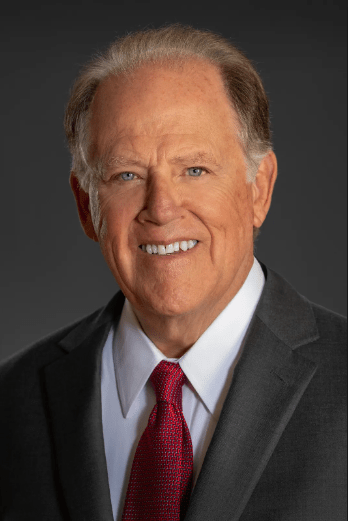
Rick Williams is an inspiring writer and speaker sharing his experience as a company founder, CEO, scientist, management consultant, and board member. His new book Create the Future is a leadership guidebook for being more creative and making better decisions for your company and yourself when you must get it right.
He brings a message of optimism and determination to succeed to an international audience through his newsletter with 50,000 readers, published thought leadership articles, social media, and speaking engagements for leadership audiences. Williams started his career as a physicist, followed by Harvard Business School, management consulting with Arthur D. Little, Inc., and founding and leading an award-winning real estate investment and development company. He serves on the board of directors of technology companies.
About Humane HR Talk
Welcome to Humane HR Talk, where we present insightful interviews with HR industry experts and thought leaders in related fields sharing their strategies, perspectives, and visions for creating more human-centric workplaces. Through these discussions, you’ll gain practical tips and fresh inspiration to transform your HR practices, to foster inclusive, thriving cultures, and to help in your own journey in the evolving world of work.
Share Your Insights
We’d love to hear your thoughts! Share your insights in the comments below.
- What stood out to you about humane HR from what you’ve read?
- What has worked well in your organisation or business?
- What would you recommend?
Disclaimer and Other Relevant Information
The insights and any linked resources in our content are for informational purposes only and do not constitute professional advice. The opinions expressed in our articles reflect the contributors’ perspectives and do not necessarily represent the views of our entire platform. Please consult our policies for more information.
Here are the shortcuts to our policies that must be read along with each other:
- Terms of Service
- Disclaimer and Disclosure
- Privacy Policy
- Voluntary Contribution Policy
- Editorial Guidelines
- Content Submissions
For more details about us and what we do, here are some of the links:
- About Us
- Blog
- Book Review Request Step 3
- Book Reviews and Requests
- Contact
- Content Submissions
- Disclaimer
- Editorial Guidelines
- Humane HR Awards
- Humane HR Awards Winners
- Humane HR Book Reviews
- Humane HR Perspectives
- Magazine
- News
- Our Supporters
- Privacy Policy
- Subscribe
- Support Us
- Terms of Service
- Voluntary Contribution Policy
Here are shortcuts to our content:
- All About Humanising HR
- Book Reviews
- Compensation and Benefits
- Compliance
- Diversity and Inclusion
- Employee Engagement
- Employee Relations
- Humane HR Awards
- Humane HR Perspectives
- Humane HR Talk
- Morale and Welfare
- News and Announcements
- Performance Management
- Recruitment and Selection
- Talent Management
- Training and Development
- Workplace Change Management
- Workplace Communications
- Workplace Health and Safety
Nominate for the Humane HR Awards
Let’s recognise, celebrate, and encourage what’s making the world of work better. It’s free to nominate. Submissions are open all year-round, but why wait? Nominate today!


 HR for Humans at Work
Leave a comment